Portfolio Consolidation at $32B: Why Body Care's Next Unicorn Skips the Conglomerate Model

The global body care market is projected to reach $32 billion by 2028, growing at a CAGR of 5.4%, and the most consequential moves within that expansion are not coming from conglomerate line extensions. They are coming from founders who understand that category ownership outperforms category participation.
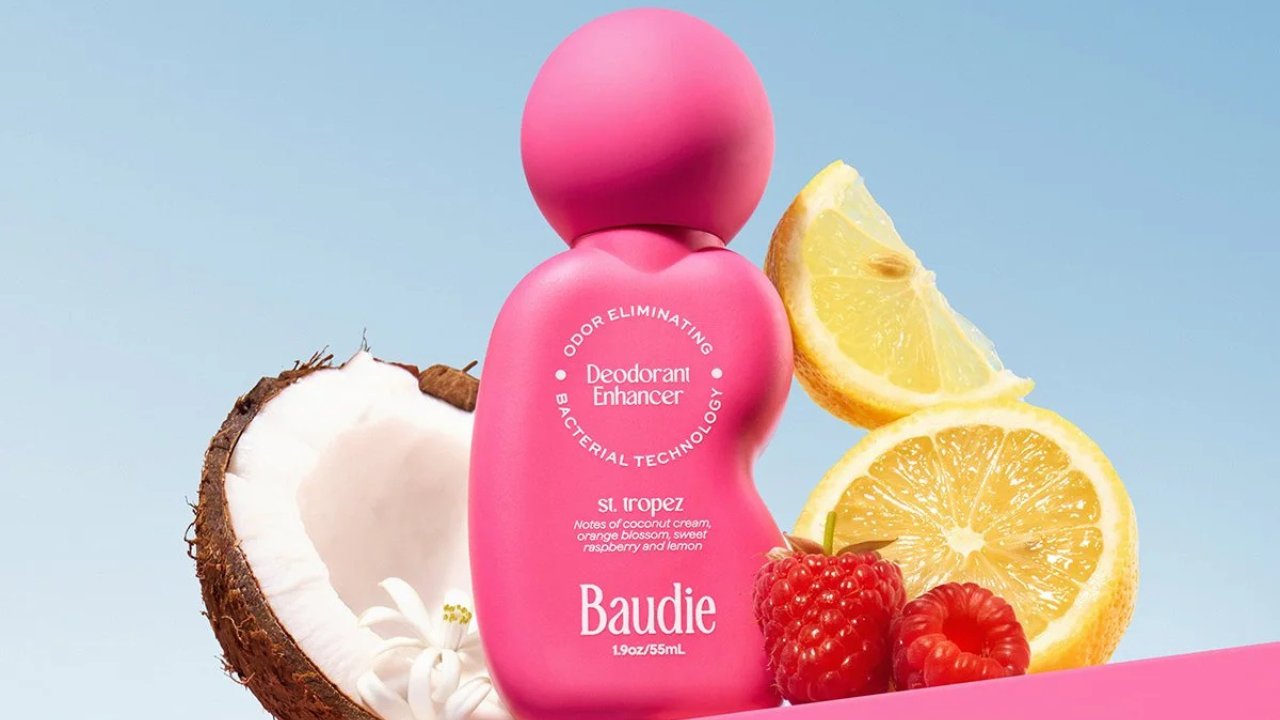
Baudie, the rebrand of Bella Skin Beauty, is a compressed case study in that logic. The brand's Probiotic Underarm Toner generated roughly 90% of revenue and sustained a 50% repeat purchase rate inside a broader skincare portfolio. Co-founders Alexandra Bella Shneider and Diana Shneider spent 15 months and self-directed capital converting that signal into a full brand reset, sunsetting the skincare range entirely and concentrating the company's identity around a single SKU, now trademarked as the Deodorant Enhancer. The strategic implications for brand managers, buyers, and investors tracking the next wave of body care consolidation are direct and instructive.
The Portfolio Reset as Competitive Moat
Most early-stage beauty brands treat product diversification as a proxy for brand legitimacy. Baudie's trajectory inverts that assumption. The decision to sunset an established SKU portfolio, rather than extend it, was accelerated by a strategic session with Christopher Gavigan, co-founder of The Honest Company and Prima, whose diagnostic was blunt: the site lacked category clarity, and diluted positioning was suppressing the hero product's commercial ceiling.
The response was a 15-month brand architecture overhaul funded entirely through founder sacrifice, including zero salaries, that produced custom packaging, a new brand identity, and a trademarked category name. That last element carries the most durable strategic value. Trademarking "Deodorant Enhancer" positions Baudie as the definitional reference point in a subcategory it is attempting to build from the ground up, a distribution architecture move that major retailers read as category-creator authority rather than incremental product.
Premiumization Inverted: Price Compression as Customer Acquisition
Baudie's pricing strategy runs counter to the premiumization wave reshaping the broader personal care market. While masstige players have used inflation cover to migrate price points upward, the Shneiders cut Deodorant Enhancer from $28 to $22, with a three-unit pack priced at $19 per bottle. That is a deliberate retention mechanism disguised as a price reduction, and the repeat purchase architecture behind it is the actual margin story.
A 50% repeat rate at a sub-$25 unit price, with a three-pack SKU embedded in the distribution model, generates predictable LTV at a customer acquisition cost that prestige-positioned competitors cannot match. For any buyer evaluating the brand at QVC or Urban Outfitters, where Bella Skin's prior SKU was already a top performer, that math is legible without a pitch deck.
Body Odor as a Clinical Category: The Market Context Retailers Are Pricing In
The broader market context amplifies Baudie's timing. Conversations about hyperhidrosis, perimenopause-related odor disruption, and skin microbiome health have migrated from niche wellness forums to mainstream social feeds, normalizing a category that historically struggled to attract prestige-tier retail placement. Advent International's majority stake acquisition in Salt and Stone earlier this year signaled institutional confidence in body care as a durable investment category, not a trend cycle. Brands including Maelys, Saltair, and Cyklar are now being tracked as M&A candidates, with Saltair reported to have engaged Raymond James to explore strategic options.
Baudie is not yet operating at that deal-making scale. But the strategic consolidation pressure building in body care creates a favorable context for focused, category-defining brands to achieve retail velocity before a larger acquirer prices in the upside. A brand with a trademarked category name, demonstrated repeat purchase economics, and retailer recognition from a prior SKU relationship is a cleaner acquisition target than a multi-SKU body care generalist with fragmented positioning.
The Distribution Architecture Question Retail Buyers Are Already Asking
Urban Outfitters and QVC represent meaningfully different distribution architectures, and the brand's engagement with both simultaneously suggests the Shneiders are testing channel fit rather than committing to a single retail identity. Urban Outfitters signals a younger, aesthetics-driven consumer and a prestige-adjacent shelf position. QVC signals a demo-driven, education-first sell-through model, which maps precisely onto a product requiring behavioral change at the point of application.
The forward-looking pressure point for Baudie is channel discipline. Category creators earn their positioning through selective distribution, not parallel retail expansion. As body care M&A activity intensifies through 2026, the brands that attract serious strategic interest will be those with a coherent distribution architecture, not simply a compelling hero product. Baudie has built the product. The next 18 months will determine whether it builds the infrastructure that makes it acquirable, or scalable, on its own terms.
This article references and builds on original reporting by Polly Blitzer for Beauty Independent. Read the original piece here: https://www.beautyindependent.com/most-beauty-brands-expand-baudie-cut-everything-else-to-focus-on-deodorant-enhancer/. BeautyScale is a commercial agency; our editorial notes are commentary on industry reporting.
Josette Assaf
Beauty market analyst covering trends, brands, and distribution shifts.