Oat Balm Cleanser Relaunch: How The Inkey List's $200M Growth Bet Hinges on a Single SKU Reset

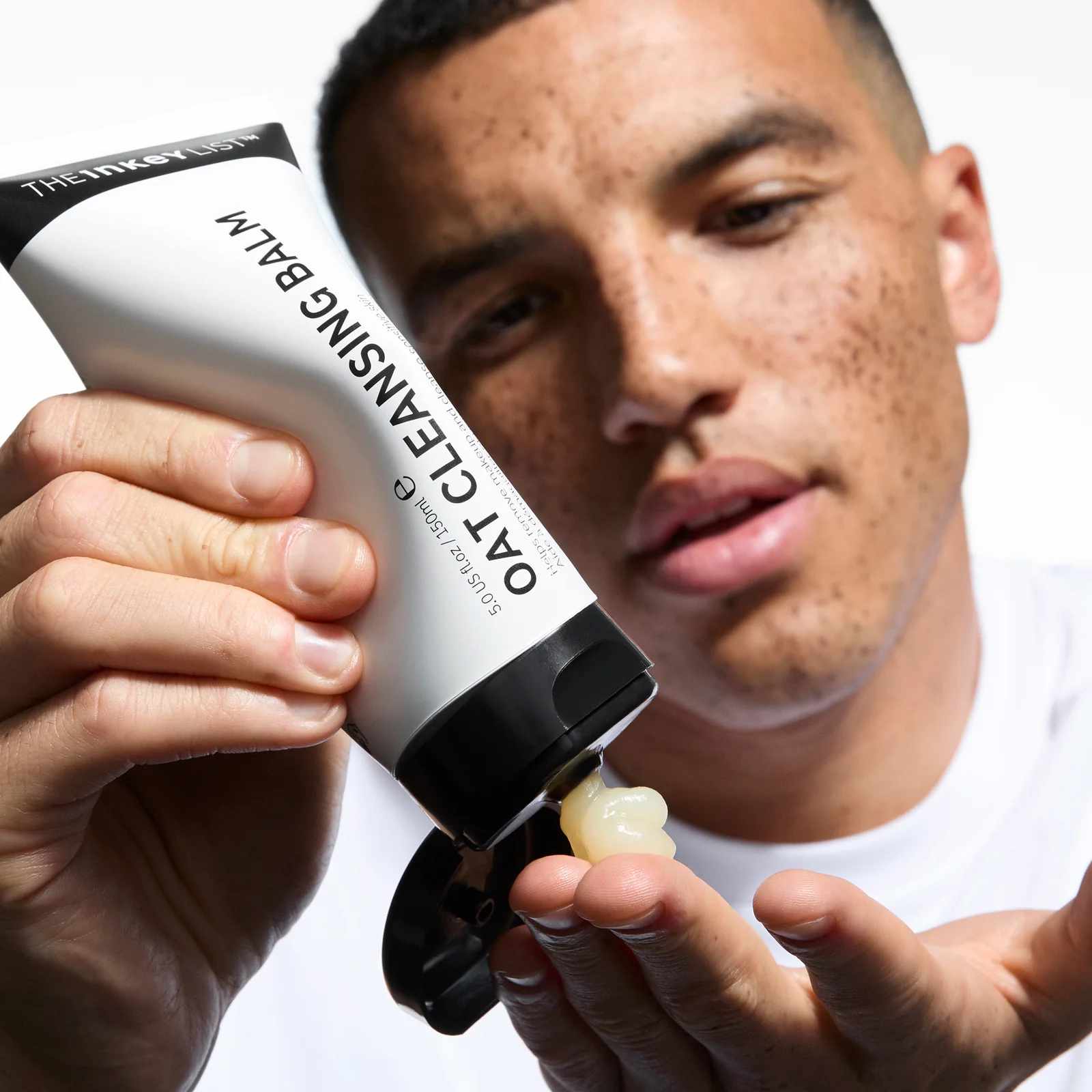
The global cleansing balm category is tracking toward $1.4 billion by 2028, growing at a CAGR of 8.3% as premiumization pressures push consumers toward multi-functional, skin-barrier-conscious formulations. Against that backdrop, The Inkey List's decision to rebuild its highest-velocity SKU from the molecular level up is less a product story and more a capital efficiency play — one that signals a measurable strategic pivot for Aria Growth Partners' most prominent portfolio asset. Industry sources cited by WWD project the brand approaching $200 million in 2026 revenues, making the reformulated Oat Balm Cleanser — estimated to generate $15 million in first-year sales alone — a load-bearing pillar of that trajectory.
A Portfolio Reset Disguised as a Product Launch
Co-founder and CEO Mark Curry has been explicit about the operational recalibration underway at The Inkey List: 18 months of margin discipline, a pullback from velocity-driven SKU proliferation, and a deliberate compression to three to four major launches annually. That architecture shift is consequential. Brands operating at the masstige price tier — where The Inkey List has historically competed at $13 to $15 retail — face acute pressure from both directions: prestige players trading down through accessible luxury positioning, and private label accelerating upward through retailer-owned clean beauty lines at Ulta Beauty and Boots.
The decision to raise Oat Balm Cleanser from $13 to $17 — a 30.7% price increase — is a controlled premiumization signal. It retains category value leadership while creating margin headroom that supports the upgraded ingredient deck: oat kernel oil elevated from 3% to 5%, refined emulsifier architecture, sea buckthorn oil, and a natural wax complex. At approximately 100 uses per 150ml tube, the per-use cost remains defensible against premium competitors at two to three times the price point.
Distribution Architecture Determines the Relaunch's Real Ceiling
The Inkey List's sequenced rollout — Ulta Beauty digital and brick-and-mortar, followed by Amazon, then Sephora.com on June 30 and Sephora stores plus Kohl's Sephora shop-in-shops on July 3 — reflects deliberate channel stratification rather than a simultaneous mass activation. Ulta Beauty first positions the relaunch within a discovery-oriented, loyalty-driven retail environment where cleansing balm conversion rates outperform category averages. The Sephora placement, arriving eight days later, captures the prestige-adjacent consumer who benchmarks against La Mer, Elemis, and Tatcha at price points three to five times higher.
This distribution sequencing matters for one structural reason: The Inkey List previously held the No. 1 cleansing balm SKU ranking at both Sephora and Boots simultaneously. Regaining that position with an upgraded formula and a higher price tier would establish a new productivity benchmark — dollars per linear foot — that directly influences shelf allocation negotiations heading into 2027 planogram cycles. Retail productivity, not brand awareness, is the currency that sustains mass-prestige positioning at scale.
The U.K. distribution footprint — Sephora, Boots, Selfridges, Space NK, ASOS, H Beauty, John Lewis, and THG retail properties — already covers the full prestige-to-accessible spectrum. The brand's challenge is harmonizing price communication and brand equity signals across retail environments with materially different consumer expectations.
The M&A Signal Embedded in Operational Discipline
Aria Growth Partners' continued backing of The Inkey List carries implications beyond operational support. The brand's 2024 UK-disclosed loss of £2.1 million (approximately $2.8 million) reflects an investment-phase P&L rather than a structurally challenged business — a distinction sophisticated acquirers apply differently than surface-level EBITDA screening. The current profitability focus, combined with hero SKU rationalization and distribution productivity improvements, is precisely the balance sheet preparation that precedes strategic consolidation conversations.
Large strategic acquirers — L'Oréal's corporate development arm, Unilever Prestige, and Puig among the most active in the masstige tier — consistently apply a revenue multiple premium to brands demonstrating both scale ($150M+ annual revenue) and operational leverage. The Inkey List is building toward both simultaneously.
Co-founder and CMO Colette Laxton's public acknowledgment of the original formulation's deficiencies — broadcasting consumer complaints directly on brand-owned social channels — is also a signal to trade partners and potential acquirers. Operational transparency at that level, combined with 129 documented formula iterations and a substantiated clinical testing program, reflects a management team building institutional-grade brand infrastructure, not a founder-led startup managing by instinct.
Forward Outlook: Hero SKU Strategy as Acquisition Currency
The cleansing balm category's acceleration through APAC — particularly South Korea, where balm-first double-cleansing remains the dominant evening skincare ritual — and the GCC's rapid prestige skincare adoption present The Inkey List with geographic expansion leverage it has yet to fully deploy. If Oat Balm Cleanser recaptures and extends its No. 1 SKU position across Sephora and Ulta's combined North American footprint through Q4 2026, the brand enters any strategic consolidation conversation with a proven, reformulated hero asset producing eight-figure revenues — the single most bankable proof point in a beauty M&A due diligence file.
Martin Jacob
Beauty market analyst covering trends, brands, and distribution shifts.