Ipsy's $800M Pivot: How the Subscription Giant Is Rebuilding Its Distribution Architecture Around IRL Discovery
**The global beauty subscription box market, once valued at over $2.8 billion at its mid-decade peak, has shed nearly a third of its active platforms since 2021** — a contraction that eliminated Birchbox, hollowed out niche competitors, and forced the category's survivors into fundamental strategi
Ipsy's $800M Pivot: How the Subscription Giant Is Rebuilding Its Distribution Architecture Around IRL Discovery
The global beauty subscription box market, once valued at over $2.8 billion at its mid-decade peak, has shed nearly a third of its active platforms since 2021 — a contraction that eliminated Birchbox, hollowed out niche competitors, and forced the category's survivors into fundamental strategic recalibration. Ipsy, the San Mateo-based platform operating under parent entity Personalized Beauty Discovery, Inc., is executing the most visible of those recalibrations: a deliberate pivot from pure-play subscription logistics toward a hybrid discovery infrastructure that combines physical activation, creator monetization, and tiered prestige positioning. With a brand portfolio spanning 400 partners — from E.l.f. Cosmetics at the masstige tier to Rodial, Laura Mercier, and the incoming Dolce & Gabbana Light Blue franchise — Ipsy is arguing that its proprietary trial-to-purchase funnel remains structurally irreplaceable in an era when social commerce drives awareness but rarely closes the sensory gap.
The Discovery Infrastructure Play
Ipsy's core strategic asset is not the box itself — it is the feedback loop. Testing approximately 8,000 SKUs annually across a subscriber base that generates over 200 million product reviews gives the platform a proprietary data layer that few retail channels can replicate at equivalent scale. CMO Stacey Politi has been explicit: "There's almost no faster way to do that than with us." That claim is commercially defensible. With more than 70% of members converting to purchase after trial, Ipsy's conversion architecture competes directly with Ulta Beauty's in-store sampling infrastructure and Sephora's Beauty Insider loyalty data — both of which operate at significantly higher customer acquisition costs for participating brands.
The recent SEC Form D filing by Personalized Beauty Discovery, Inc. — disclosing an equity or equity-linked securities offering without a specified raise target — signals that the company is likely engineering either a capitalization event ahead of a strategic exit or a growth financing round designed to accelerate the IRL activation strategy. The timing is notable: filed as the company repositions its event infrastructure, expands wellness verticals, and onboards prestige fragrance partners at the D&G tier.
Regional Activation as Distribution Diversification
Ipsy's geographic strategy is a sophisticated demand-mapping exercise, not a marketing exercise. The company's deliberate targeting of Texas and Florida — alongside rising member concentration in what Politi calls underserved markets — reflects a distribution logic rooted in demographic shifts rather than cultural cachet. These are high-growth beauty consumption markets with underdeveloped specialty retail density relative to coastal metros, precisely the whitespace where a curated trial-and-discovery model can displace unguided e-commerce as the primary product introduction channel.
The SoHo pop-up, which generated block-length queues and preceded Ipsy's fourth annual Brand & Creator Forum — drawing 80 brand partners and 50-plus creators — functions as both a member retention mechanism and a brand sales tool. For emerging labels like Tower 28 Beauty, Danessa Myricks Beauty, and Byroe New York, Ipsy activations represent a cost-efficient path to concentrated prestige-adjacent consumer trial that independent retail placements cannot guarantee.
Category Mix and the Premiumization Signal
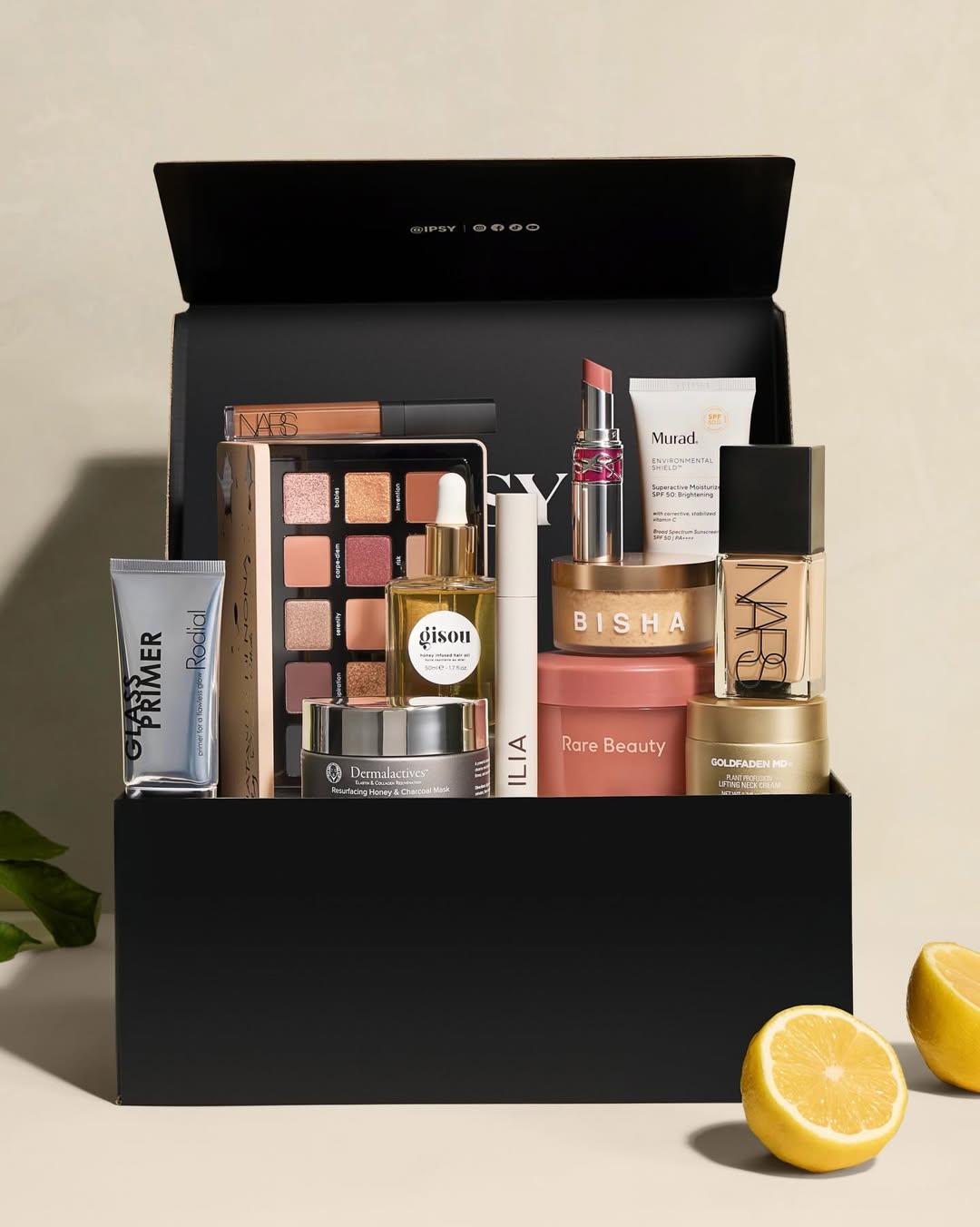
Ipsy's 2025 blush revenue of $2.1 million — up 34% year-over-year — is a microcosm of a broader masstige-to-prestige migration visible across the platform's top-seller data. Rare Beauty's Soft Pinch Liquid Blush and Charlotte Tilbury's Beauty Wand Duo sitting alongside Fenty and Kosas in the same subscriber box signals that Ipsy's positioning has shifted decisively toward premiumization without fully abandoning accessible price architecture. The three-tier membership structure — Original at $15, Extra at $32, and Ultimate at $62 quarterly with a $500-value SKU composition — operationalizes that range vertically, capturing both entry-level and trade-up behavior within a single retention ecosystem.
Fragrance's emergence as a leading growth category, anchored by Sol de Janeiro and accelerating into the D&G partnership in July, is particularly strategically significant: prestige fragrance has historically resisted the subscription model, making Ipsy's traction a signal that consumer openness to fragrance trial via curated subscription is genuinely expanding.
The Forward Position
Ipsy's WNBA sponsorship with the Las Vegas Aces, combined with accelerating wellness expansion into ingestibles and sexual wellness, indicates a deliberate audience broadening beyond its core 25-to-45 female demographic. The platform that Michelle Phan co-founded in 2011 and scaled to a reported $1 billion revenue run rate post-BoxyCharm acquisition is no longer optimizing for subscription volume — it is rebuilding as a full-funnel brand commercialization platform. For brand managers evaluating trial-to-shelf pathways and investors tracking beauty discovery infrastructure, Ipsy's current architecture reset may represent the most consequential distribution model evolution in specialty beauty since Sephora redesigned its loyalty stack.