Fresh-Made Skincare's $6.2B Dilemma: Why Small-Batch Formulation Is Breaking Conventional Distribution Architecture
The global active skincare segment is projected to reach $22.4B by 2028, yet a quietly insurgent subcategory — freshly made, preservative-free formulations — is forcing brand strategists and retail buyers to reconsider whether the industry's standard distribution architecture is compatible with its most potent emerging product innovation.
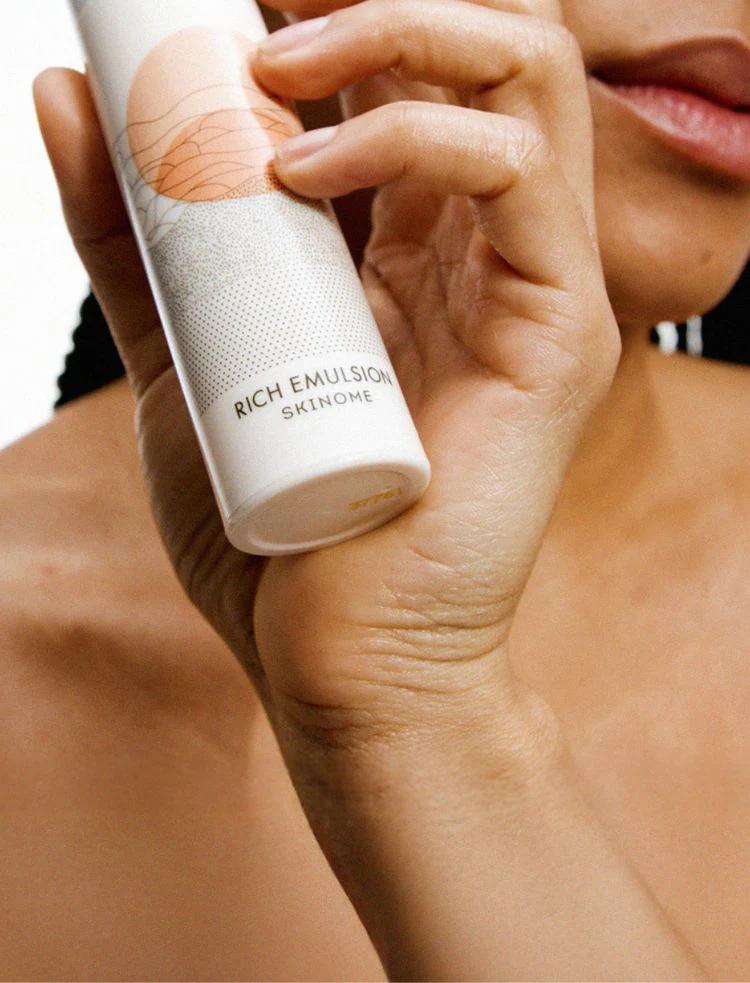
Brands including Skinome, Exponent, and Skin at Peace are not simply marketing freshness as a lifestyle concept. They are operationalizing a fundamentally different supply chain logic — cold-storage requirements, compressed shelf windows, weekly production cycles — that collides directly with the channel infrastructure that built prestige skincare's modern commercial model. The strategic tension is immediate and commercially significant. A brand engineered for the refrigerator cannot scale through Sephora's ambient-temperature supply chain without compromising the very efficacy claim that differentiates it.
Distribution Architecture Is the Real Constraint — Not Formulation
The fresh-made positioning challenge is not a chemistry problem. It is a logistics problem dressed as a marketing opportunity. Traditional prestige distribution — whether Neiman Marcus, department store concessions across APAC, or the GCC's fast-expanding specialty beauty retail network — operates on replenishment cycles that routinely extend product shelf time to four to eight months between manufacture and consumer use.
Skinome co-founder Dr. Johanna Gillbro, whose clinical research includes published collaborations with Karolinska Institutet and Linköping University, has been transparent on this point: products developed for the skin rather than the shelf require cold storage and carry printed production and expiry dates. That level of supply chain transparency is structurally incompatible with wholesale distribution at scale. It is, however, precisely aligned with a direct-to-consumer model that commands premium subscription economics.
Premiumization Pressure and the Masstige Blind Spot
The broader premiumization wave moving through skincare — now measurable at a CAGR of approximately 6.8% in the prestige segment across North America and Western Europe — has generated a masstige middle market hungry for clinical credibility at accessible price points. Fresh-made brands are unlikely to occupy that masstige corridor. Their cold-chain requirements, compressed production windows, and deliberately limited batch volumes make margin structures hostile to the $35–$65 price architecture that defines masstige skincare's sweet spot.
What fresh-made brands are building, whether intentionally or not, is a prestige positioning argument anchored in ingredient integrity rather than heritage narrative or celebrity association. That is a durable equity position in the current market environment, where ingredient-literate consumers — and the brand managers now serving them — are increasingly skeptical of legacy efficacy claims.
M&A Calculus: Strategic Asset or Integration Liability?
For strategic acquirers — L'Oréal's acquisition arm, Unilever Prestige, Shiseido's venture activity, or the MENA-based holding groups now actively expanding beauty portfolios — fresh-made brands present a genuine due diligence paradox. The clinical substantiation is real. Skinome's published microbiome research represents a category of scientific validation that most indie prestige brands cannot produce. The consumer insight is directionally correct: post-pandemic demand for transparency, bioactive potency, and microbiome-aligned formulation has accelerated measurably.
The integration liability is equally real. Acquiring a brand whose core equity depends on a supply chain architecture that cannot survive the acquirer's existing distribution network is a portfolio reset problem that goes beyond reformulation. It requires either building a separate cold-chain D2C infrastructure or accepting that the brand's addressable market remains structurally capped — valuable as a prestige signal within a portfolio, but not a volume driver.
Strategic consolidation in this subcategory will likely favor minority investment and partnership structures over full acquisition, preserving the operational independence that makes the formulation integrity claim defensible.
The Channel-Proof Brand Is the Next Competitive Moat
The most forward-looking implication of the fresh-made movement is not about preservatives. It is about which brands are engineering their equity so that retail channel dependency becomes a vulnerability rather than an asset. As APAC and GCC specialty beauty retail continues its aggressive expansion — Sephora's GCC footprint grew double digits in 2023, and the region's prestige beauty market is forecast to exceed $6.2B by 2026 — the brands that command pricing power will increasingly be those whose efficacy claims cannot be replicated at ambient temperature, at scale, or through a co-manufacturer.
Fresh-made formulation, whatever its commercial constraints today, is building the blueprint for what brand defensibility looks like in the next cycle of the prestige skincare market.