Clinique's Black Honey Expansion: How a $25 Lipstick Is Anchoring a $13B Prestige Lip Category Reset

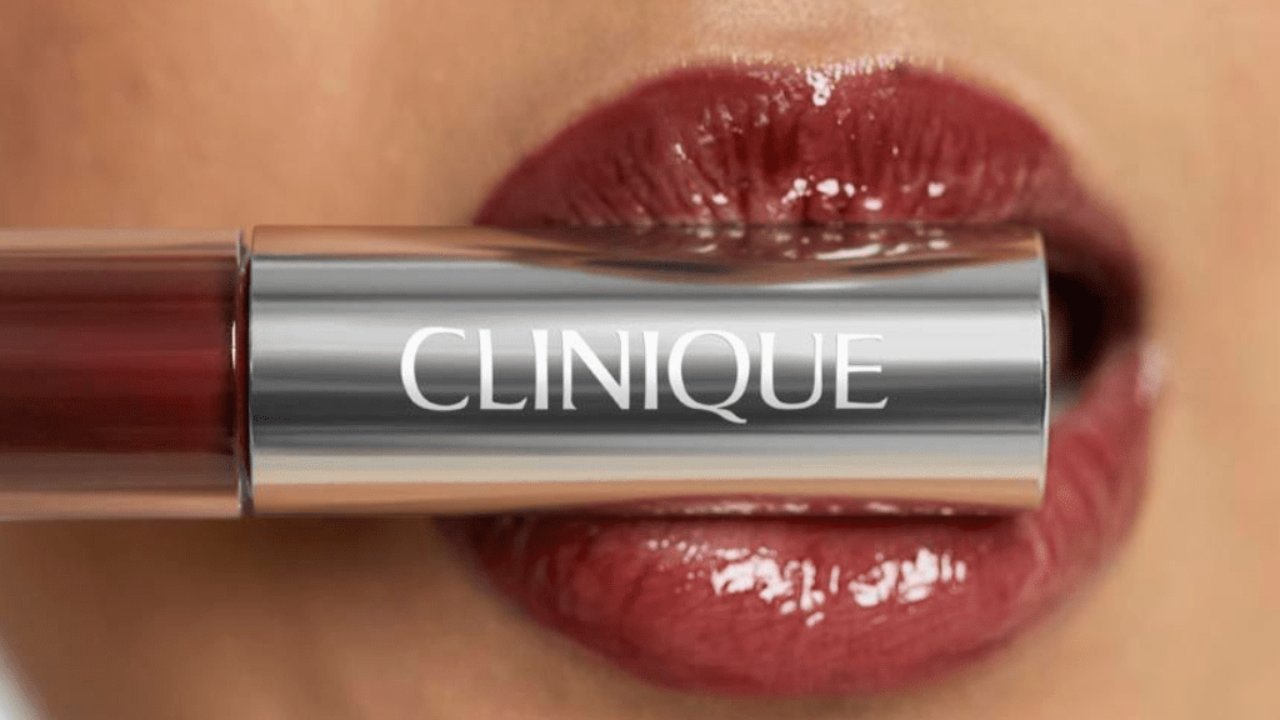
The global prestige lip color market is projected to reach $13.4 billion by 2027, growing at a CAGR of 6.8 percent, and Clinique's calculated expansion of its Black Honey franchise signals precisely how incumbent heritage brands intend to compete for that share. The Estée Lauder Companies-owned brand launched a limited-edition Black Honey collection in 2025 anchored by the original Almost Lipstick ($25), now flanked by a volumizing mascara ($30), an eyeshadow quad ($44), and a nail polish ($18). This is not a product drop. It is a distribution architecture decision, a portfolio signal, and a prestige positioning play compressed into a single franchise activation. For brand managers and retail buyers tracking how legacy prestige labels are rebuilding relevance without cannibalizing core equity, the Black Honey expansion deserves close analysis.
A Single SKU Becomes a Portfolio Architecture
Clinique's Almost Lipstick in Black Honey has been in continuous production since its 1971 launch by cofounder Carol Phillips, an exceptional durability record in a category defined by trend velocity. Christie Scatler, Senior Vice President of Global Marketing for Clinique Global, framed the product's staying power in terms of adaptive personalization: the deep raisin-brown formula sheers down to complement individual lip tone, creating a perceived customization effect without the operational complexity of bespoke manufacturing.
That formula characteristic, not the color alone, is the strategic asset Clinique is now monetizing across adjacencies. By extending Black Honey into mascara, eyeshadow, and nail color, the brand is executing a franchise architecture model, one Lauder peers like MAC and Charlotte Tilbury have deployed successfully with their own hero SKUs. The move mirrors MAC's Ruby Woo ecosystem expansion and reinforces a broader ELC portfolio trend: extract maximum revenue per hero product before the cultural window closes.
They generate impulse purchase volume from consumers already familiar with the hero SKU, require minimal counter education, and photograph well for the social amplification that duty-free shoppers in APAC markets drive organically.
Masstige Pressure Is Reshaping the Prestige Playbook
Clinique occupies a structurally complex position in the current market. The brand sits at the accessible end of the ELC prestige portfolio, with price points that increasingly overlap with the upper tier of masstige challengers including e.l.f. Cosmetics and Rare Beauty, both of which posted revenue growth exceeding 20 percent in fiscal 2024. A $25 lipstick and an $18 nail polish are not insulated from that competitive pressure by brand equity alone.
The Black Honey limited-edition strategy addresses this directly by deploying scarcity mechanics to reassert prestige positioning without a price increase. Limited-edition releases create purchase urgency at existing price points, protect margin by reducing promotional dependency, and generate organic earned media through the collector behavior they trigger among loyal consumers. For retail buyers at Ulta Beauty and Sephora, franchise-based limited editions also simplify reorder conversations and floor-space allocation decisions.
Distribution Architecture and the Department Store Recovery
The timing of this launch carries a retail channel dimension that the consumer press is not tracking. Department store beauty, Clinique's founding distribution home, has been in structural contraction across North America and Western Europe since 2020. However, travel retail, particularly in APAC and the GCC, is recovering faster than domestic channels, with duty-free beauty sales up approximately 18 percent year-over-year through Q1 2025 according to Generation Research data.
However, travel retail, particularly in APAC and the GCC, is recovering faster than domestic channels, with duty-free beauty sales up approximately 18 percent year-over-year through Q1 2025 according to Generation Research data.
Limited-edition franchise collections are ideally structured for travel retail and specialty-multi environments. They generate impulse purchase volume from consumers already familiar with the hero SKU, require minimal counter education, and photograph well for the social amplification that duty-free shoppers in APAC markets drive organically. Clinique's global distribution footprint, spanning over 135 markets, means even a limited-edition activation achieves scale that independent brands with comparable cultural heat cannot replicate.
The Forward Indicator: Heritage Equity as M&A Currency
The Black Honey expansion is also a data-generation exercise with longer-term strategic implications. How the collection performs across SKU categories, eyeshadow versus nail versus mascara, will inform Clinique's internal case for either deepening the franchise or licensing adjacency categories to third-party manufacturers, a model already in use across the ELC portfolio for fragrance and haircare extensions.
More broadly, as M&A activity in prestige beauty accelerates, brands with demonstrable multi-category franchise equity command materially higher valuation multiples. A single SKU with fifty years of continuous sell-through and the proven ability to generate incremental category adoption across color cosmetics is not a nostalgia play. It is a strategic asset with compounding returns, and Clinique's portfolio managers appear to understand precisely what they are sitting on.
This article references and builds on original reporting by Britt Fallon for newbeauty.com. Read the original piece here: https://www.newbeauty.com/view/clinique-black-honey-collection-2026. BeautyScale is a commercial agency; our editorial notes are commentary on industry reporting.
Martin Jacob
Beauty market analyst covering trends, brands, and distribution shifts.