Clean Beauty's Quiet Ambitions: How Wonderblush Is Building a $32B Market Case From Quebec

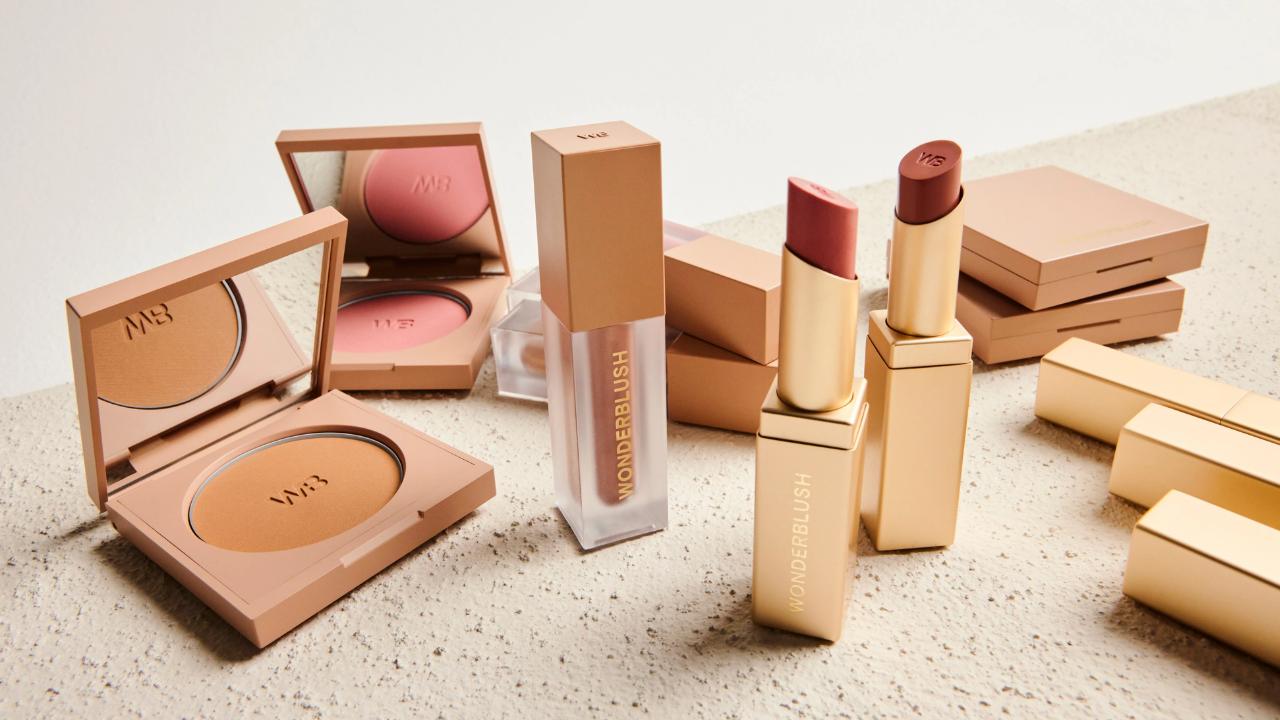
The global clean beauty market is projected to reach $32 billion by 2028, compounding at a CAGR of roughly 12 percent, and the brands best positioned to capture that growth are not necessarily the ones with the largest SKU counts. Wonderblush, a Quebec-founded vegan and cruelty-free makeup line co-founded by makeup artist Melanie Hachey, has built its early commercial thesis on deliberate portfolio restraint, a direct-to-consumer foundation, and specialty retail placement now spanning 20 countries. That distribution footprint, modest in headline terms but geographically significant for a brand at this stage, signals something the broader prestige and masstige segments should be watching closely. The question for brand strategists and potential acquirers alike is whether Wonderblush's model represents a replicable architecture or a singular founder-driven exception.
A Curated Portfolio as Competitive Moat
Where most emerging color cosmetics brands scale through SKU proliferation, Wonderblush has taken a structurally opposite position. Hachey built the range around multifunction formats, a lip product that doubles as a blush, cream textures deployable across multiple face zones, and shade edits narrow enough to eliminate decision fatigue at the point of purchase. This is not minimalism as an aesthetic choice. It is a portfolio reset with operational logic behind it, reducing carrying costs, simplifying retailer sell-through, and tightening inventory cycles in a category where shade range complexity routinely erodes margin at the indie level. For buyers evaluating specialty retail shelves already crowded with 400-plus SKU lines, a tightly edited assortment with strong unit velocity is increasingly the preferred profile.
It is a portfolio reset with operational logic behind it, reducing carrying costs, simplifying retailer sell-through, and tightening inventory cycles in a category where shade range complexity routinely erodes margin at the indie level.
Distribution Architecture Built for Scalability
Wonderblush operates across two revenue channels: a direct-to-consumer e-commerce store and a specialty retail network that includes Beauties Lab, Supermarché Avril, and select Jean Coutu locations in Canada. The dual-channel model is structurally sound for a brand at this capitalization stage, preserving margin on DTC while using retail partners to build physical brand equity and trial. The 20-country retail presence, even if currently limited in depth per market, establishes the kind of international distribution architecture that strategic acquirers in the M&A pipeline treat as a multiplier on valuation. Estee Lauder Companies, L'Oreal's acquisitions unit, and the Puig portfolio have each demonstrated a consistent willingness to pay premiums for brands with pre-built retail infrastructure in markets where the acquirer wants deeper clean beauty penetration without building from scratch.

Prestige Positioning Without Prestige Price Anchoring
Hachey's brand language, centered on refinement, effortlessness, and skin-loving formulations, tracks closely with the vocabulary of prestige positioning, yet Wonderblush has not yet committed to a price architecture that fully reflects that positioning. This is both a risk and an opportunity. The masstige corridor, where brands sit between drugstore and true luxury, has become aggressively crowded post-2020 as consumers recalibrated spending habits and legacy players responded with premiumization initiatives across mid-tier lines. For Wonderblush, the strategic window to establish cleaner prestige pricing before category compression tightens is narrowing. Brands that anchor early in the $38 to $65 price band for core SKUs while sustaining clean credentials tend to defend margin better through retail partner negotiations and hold stronger positioning ahead of any M&A conversation.
Brands that anchor early in the $38 to $65 price band for core SKUs while sustaining clean credentials tend to defend margin better through retail partner negotiations and hold stronger positioning ahead of any M&A conversation.
The Founder-Led Brand as Strategic Asset
The Wonderblush customer, defined by Hachey herself as a mindset rather than a demographic, is precisely the psychographic profile that large strategic buyers have struggled to cultivate organically. That customer prioritizes considered ingredients, simplified routines, and a low-noise brand relationship, attributes that resist mass advertising and are instead built through founder authenticity, community trust, and product consistency over time. Hachey's background in bridal makeup artistry, a high-trust, high-consideration consumer context, has translated directly into the brand's editorial restraint and formula philosophy. That founder-to-consumer trust architecture is difficult to replicate through acquisition and equally difficult to scale without eroding, which means the optimal window for a strategic partnership or minority investment is while the founder relationship remains central to the brand identity.
The clean beauty segment will not consolidate uniformly. Brands with disciplined distribution architecture, defensible portfolio logic, and founder equity that hasn't yet been diluted by overextension will attract the most durable capital. Wonderblush, at 20 distribution markets and a deliberately constrained SKU count, sits at precisely the inflection point where the next 24 months of strategic decision-making will determine whether it becomes a category reference or an acquisition target absorbed into a larger portfolio reset. Both outcomes represent success. The question is who controls the terms.
This article references and builds on original reporting by Bronwyn Lewis for montrealguardian.com. Read the original piece here: https://montrealguardian.com/montreal-business-wonderblush/. BeautyScale is a commercial agency; our editorial notes are commentary on industry reporting.
Nya Ravel
Beauty market analyst covering trends, brands, and distribution shifts.